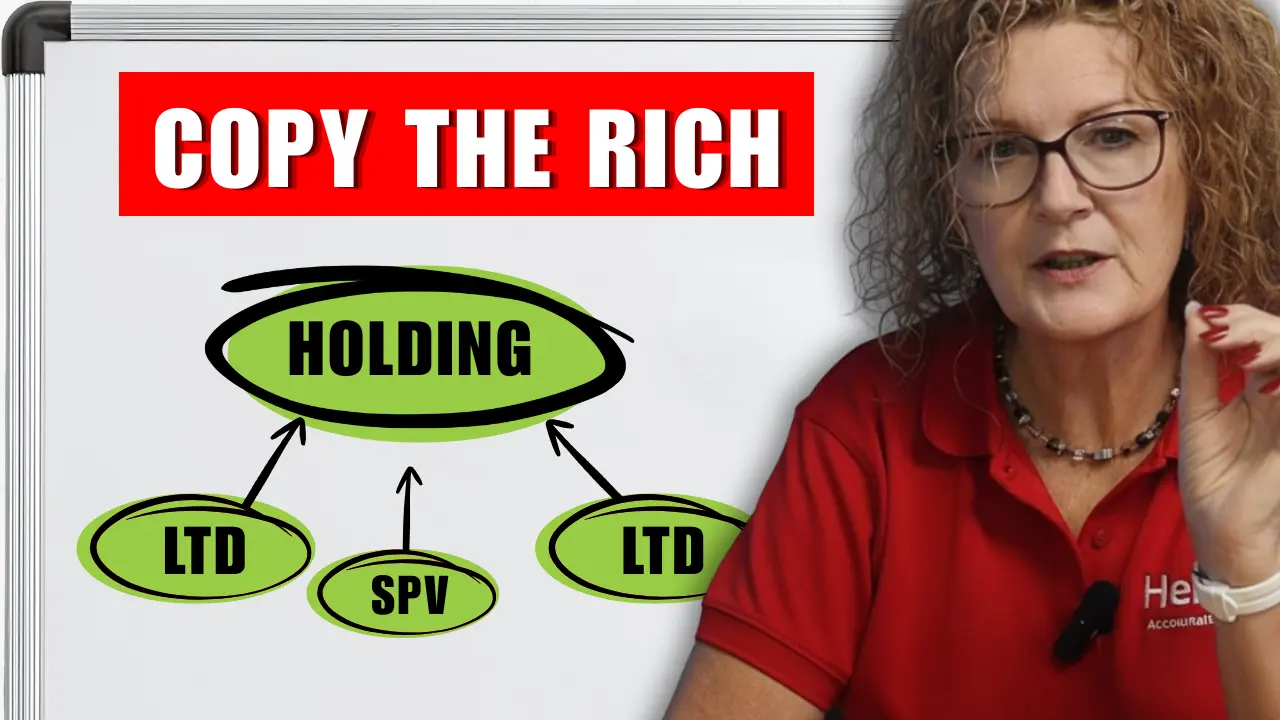

You may have heard the phrase:
“the rich own nothing.”
At first glance, it sounds misleading or even suspicious.
In reality, it reflects a fundamental shift in how wealth is structured.
Wealthy individuals do not avoid ownership altogether. They simply avoid owning the wrong things in their personal name.
Instead, they focus on control over assets, protection from risk, and tax efficiency over time.
In this guide, we explain what this actually means in a UK context and how understanding it can completely change the way you think about building and protecting wealth.
Ownership vs Control: The Key Principle
The biggest misconception about wealth is that it is about ownership.
In reality, it is about control.
When you personally own assets such as property, vehicles, investments, or savings, they are legally tied to you.
This means they may be exposed to legal claims, creditors, tax disputes, or divorce proceedings.
In contrast, when assets are owned by a limited company, the situation changes.
A limited company is a separate legal entity. It owns its own assets and liabilities.
You do not own the asset directly. You own or control the company that owns the asset.
This creates a clear separation between personal wealth and business assets.
Why This Matters: Risk and Asset Protection
This distinction becomes critical when things go wrong.
Consider a simple example.
Two individuals use the same £50,000 car.
One owns it personally. The other uses a company-owned car.
If both face legal action, the personally owned car may be at risk. The company-owned car belongs to the company, not the individual.
This does not make assets untouchable, but it reduces exposure significantly.
This principle underpins how many wealthy individuals protect their assets.
The Real Strategy: Structure, Not Loopholes
There is a common belief that wealth protection relies on complex offshore structures or loopholes.
In most UK cases, that is not true.
The strategy is usually built on limited companies, holding structures, proper documentation, and forward planning.
In simple terms, it is not about hiding assets. It is about structuring them correctly.
How Wealthy Individuals Structure Their Assets
Once you understand the principle, you start to see it everywhere.
Common examples include property owned through companies, investments held within company structures, and intellectual property owned by businesses rather than individuals.
This creates a financial separation layer between the individual and the asset.
The Mindset Shift: Exposure Is the Real Risk
Most people are taught that ownership equals security.
For example, owning your home outright, owning your car, or keeping everything in your own name.
Wealthy individuals tend to think differently.
They focus on reducing exposure, increasing flexibility, and protecting downside risk.
The key question becomes:
If something goes wrong, how much of this is exposed?
Tax Efficiency: It’s About Timing, Not Avoidance
Another major advantage of using company structures is tax timing.
If you earn income personally, income tax and National Insurance apply immediately and you have limited flexibility.
If income is earned through a company, Corporation Tax applies first and you decide when to extract money.
This allows you to spread income across tax years, avoid higher tax bands, and reinvest profits before personal tax applies.
The key difference is not whether tax is paid. It is when and how it is paid.
Cashflow and Wealth Building
Keeping money inside a company can accelerate growth.
Profits can be reinvested before personal tax, assets can be acquired through the company, and growth compounds more efficiently.
For example, a company earning rental income can reinvest profits directly, build deposits faster, and expand more quickly.
Compared to personal ownership, where tax is applied first, this can significantly affect long term growth.
How the Wealthy Access Their Money
If the company owns everything, how is the money actually used?
There are several standard methods.
Salary is typically kept low to utilise allowances and maintain National Insurance records.
Dividends are paid from profits, taxed differently, and provide flexibility. This is where most director income comes from.
Director’s loans can be used for short term access to funds, but must be managed carefully to avoid tax issues.
Protecting the Structure Properly
Setting up a company is only part of the strategy.
To maintain protection, it must be managed correctly.
You need to keep business and personal finances separate, maintain proper documentation, avoid excessive personal use of company funds, and understand the risks of personal guarantees.
Failure to do this can weaken the structure and in some cases remove the protection entirely.
Common Mistakes to Avoid
Treating the company like a personal bank account is a common issue and increases risk.
Signing personal guarantees without understanding them can remove limited liability.
Putting everything in one company increases exposure across the business.
Poor planning often leads to inefficient structures and missed opportunities.
Final Thoughts
The phrase “the rich own nothing” is about structuring ownership correctly, separating personal and business risk, and controlling how and when money is taxed.
These strategies are not reserved for the ultra wealthy. They are based on UK company law and tax principles available to all business owners.
The difference is how they are applied.
Need Help Structuring Your Assets Properly?
If you are building a business, investing, or growing your income, your structure becomes increasingly important.
Getting it right can help you reduce tax, protect your assets, and build long term wealth more efficiently.
We help UK business owners set up and optimise company structures, improve tax efficiency, and protect assets as they grow.