
Choosing the right business structure is one of the most important financial decisions you will make.
Done correctly, it can help you:
- reduce your tax bill
- protect your personal assets
- build and retain wealth inside your business
Done incorrectly, it can cost you thousands every year.
Most advice focuses only on sole trader vs limited company. But in reality, the biggest opportunities often come from what sits behind that, including holding companies, group structures, and ownership planning.
In this guide, we break down how business structures work in the UK, when to upgrade your setup, and how more advanced structures can unlock significant tax advantages.
This is based on your original script, reworked into a clear and practical guide.
Sole Trader vs Limited Company: The Foundation
Before looking at advanced structures, it is essential to understand the core difference between operating as a sole trader and running a limited company.
Sole Trader
As a sole trader:
- you and the business are legally the same
- you pay Income Tax and National Insurance on your profits
- you report everything through Self Assessment
This structure is simple and low-cost to run. However, it comes with a major downside:
You are personally liable for the business.
If something goes wrong, your personal assets may be at risk.
Limited Company
A limited company is a separate legal entity.
This means:
- the company pays Corporation Tax on profits
- you extract money via salary, dividends, or pensions
- your personal liability is limited
This structure gives you:
- more control over how and when you take income
- greater tax planning flexibility
- protection for personal assets
When Should You Switch to a Limited Company?
There is no single “perfect” point, but profitability is a key factor.
Around £30,000 Profit
At this level, the difference between sole trader and company is often minimal once costs are considered. Remaining a sole trader can still be efficient.
Around £50,000 Profit
The benefits of a company start to become clearer.
You may:
- retain more profit within the business
- gain flexibility over when you extract income
£100,000+ Profit
This is where the difference becomes significant.
As a sole trader:
- you move into higher-rate tax bands
- your tax burden increases sharply
As a limited company:
- profits are taxed at Corporation Tax rates
- you can retain earnings
- you control when to extract income
The key advantage becomes timing and control over taxation, not just the headline rate.
Why Structure Matters Beyond “Going Limited”
Many business owners stop thinking about structure once they set up a limited company.
This is where opportunities are often missed.
Even with a company, you may still be:
- paying unnecessary tax
- exposing profits to risk
- missing out on reliefs
This is where holding companies and group structures come in.
What Is a Holding Company?
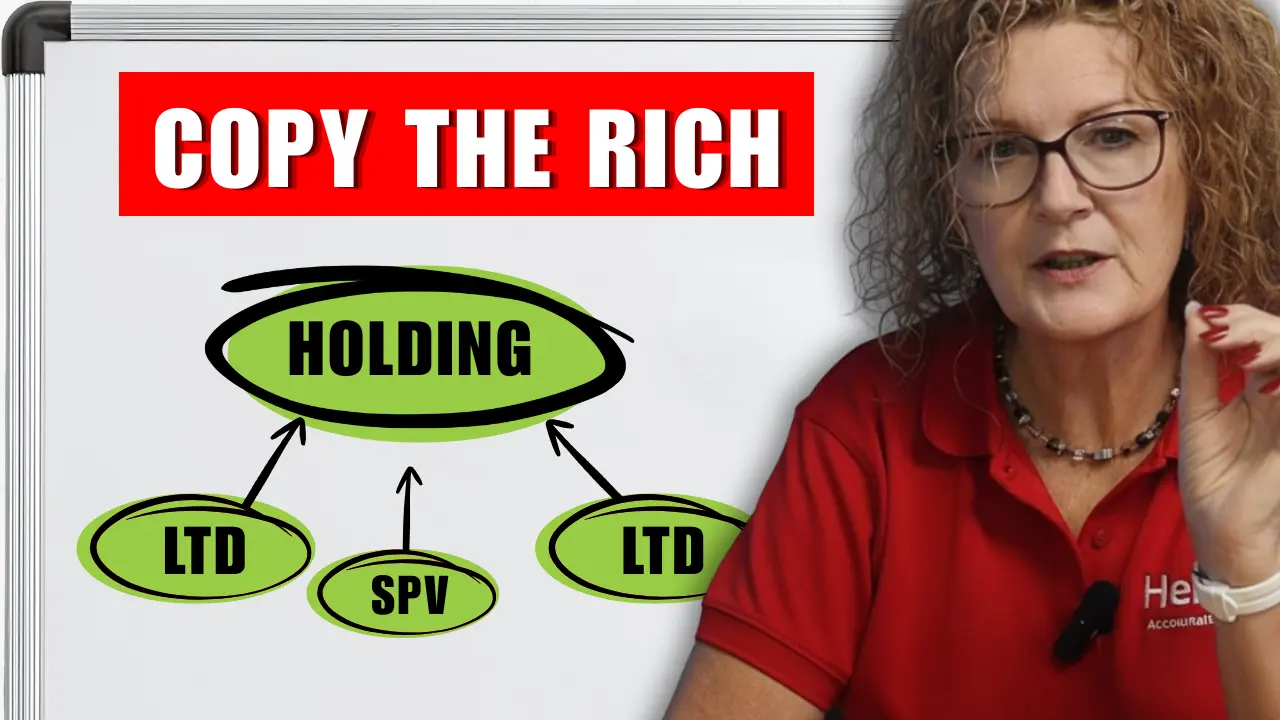
A holding company is a company that owns shares in one or more other companies.
Typically:
- the holding company sits at the top
- your trading company sits underneath
The holding company usually does not trade, it exists to own and control assets.
Why Use a Holding Company?
A properly structured group can provide several advantages.
1. Move Profits Without Personal Tax
If structured correctly, profits can be moved between companies without triggering dividend tax.
Instead of taking money personally:
- profits can be retained within the group
- reinvested into new ventures
- used to build long-term wealth
2. Protect Your Cash
By moving profits into a holding company:
- they are separated from trading risk
- they are protected if the trading company fails
This is a key strategy used by more sophisticated business owners.
3. Reinvest More Efficiently
Holding companies allow you to:
- invest in new businesses
- acquire assets
- build a group structure
All without triggering personal tax at each step.
How to Set Up a Valid Group Structure
This is where many people get it wrong.
To form a recognised group for tax purposes:
- one company must own at least 75% of another company
- this ownership must be properly documented
- shares must be formally transferred or issued
Simply owning two companies personally does not create a group.
If the structure is not set up correctly:
- HMRC may not recognise it
- tax reliefs may be denied
- unexpected tax charges may arise
Tax Benefits of Group Structures
Once properly established, group structures unlock several valuable reliefs.
Group Loss Relief
Losses in one company can be offset against profits in another.
Example:
- Company A profit: £80,000
- Company B loss: £40,000
Tax is only paid on £40,000 not £80,000.
This can significantly reduce Corporation Tax.
Intra-Group Transfers
Assets can be moved between companies without triggering Capital Gains Tax, provided conditions are met.
This allows:
- restructuring
- asset protection
- internal reorganisation
VAT Grouping
Multiple companies can be treated as a single VAT entity.
Benefits include:
- one VAT return
- no VAT on intercompany transactions
- simplified administration
Centralised R&D Claims
Where applicable, R&D activity can be structured within the group to:
- simplify claims
- improve efficiency
- maximise relief
Common Mistakes to Avoid
Group structures are powerful but only when done correctly.
1. Not Getting HMRC Clearance
When restructuring, particularly using share-for-share exchanges, HMRC clearance is often required.
Without it:
- transactions may be treated as disposals
- Capital Gains Tax may apply
2. Poor Documentation
Informal setups are not enough.
You need:
- proper legal agreements
- accurate Companies House filings
- correct share structures
3. Incorrect Asset Transfers
Moving assets incorrectly can trigger:
- Capital Gains Tax
- Stamp Duty Land Tax
- loss of reliefs
4. Impact on Future Exit (BADR)
Restructuring can affect:
- Business Asset Disposal Relief eligibility
- holding periods
Poor timing can lead to significantly higher tax on sale.
Final Thoughts
Your business structure is not just a legal formality it is a key part of your tax strategy.
For most UK business owners:
- sole trader vs limited company is just the starting point
- the real opportunities come from structuring correctly as you grow
- advanced setups can significantly improve tax efficiency and asset protection
The key is not complexity for its own sake it is using the right structure at the right time.
Need Help Structuring Your Business?
If you are unsure whether your current structure is optimal, or you are considering moving to a limited company or group setup, getting it right early can save you significant time and money.
We help UK business owners:
- choose the right structure
- set up holding companies correctly
- optimise tax across their business